Turlock highlight
Agricultural center in the northern San Joaquin Valley
The Turlock Irrigation District, founded in 1901 as California's first under the Wright Act, transformed the San Joaquin Valley from wheat monoculture to diversified crop production.
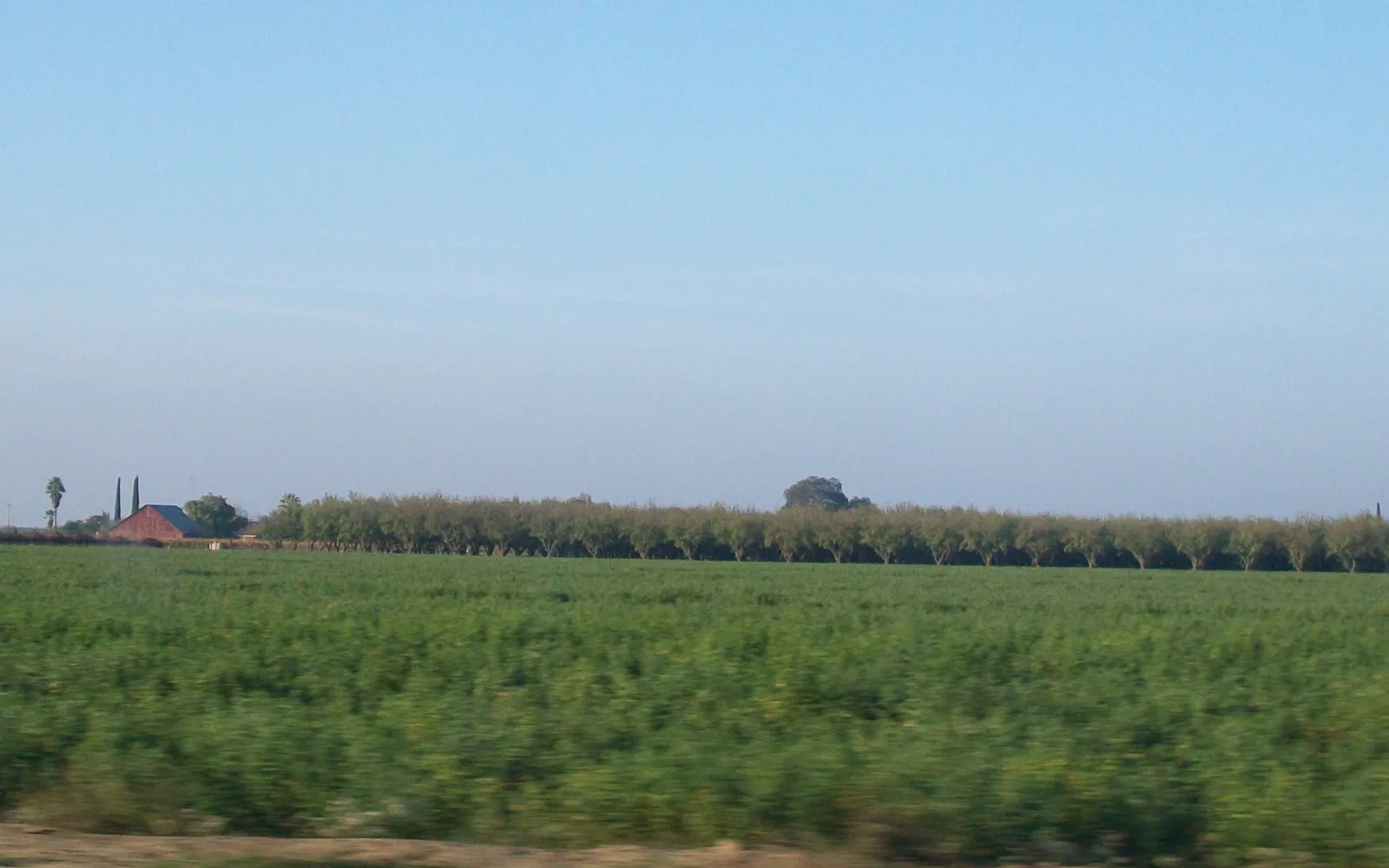
Turlock grew as a railroad town after its founding in 1871 by John William Mitchell, but the city's economic future turned on water. The Turlock Irrigation District, established in 1901, was California's first irrigation district created under the 1887 Wright Act. The district brought reliable water to a landscape where drought and soil exhaustion had made wheat monoculture unsustainable, opening the valley to fruit growing, dairying, poultry raising and other year-round agriculture.
By 1903 and 1904, Midwestern settlers arrived in Turlock seeking cheaper land and the promise of abundant irrigation water in a milder climate. What they found was opportunity: a landscape that could produce multiple crops year-round, and a hub town with railroad connections to distribute the harvest. Today the farms around Turlock produce almonds—the number-one farm export from California and nearly 80 percent of the world's supply—as well as milk, cotton, sugar beets and fresh vegetables for markets across North America.
Agricultural families build long-term plans around their land and their harvests. The income from a successful growing season supports not just today's household, but next year's equipment, education for children, and the continuity of the operation itself. Life insurance protects that continuity: if the farm's principal is not there to plan and decide, a term policy sized to the business and the family keeps both together through the transition.